


Quality of service QoS for your network
We configure quality of service so your customers’ voice, video and remote work run smoothly even when the network is busy.
10+ years of experience Multi-vendor compatibility Per-subscriber plans Lower latency under load
Where this service fits in the life of your network
Each service hands a documented network to the next one, so you can start at the stage your network needs today.
- Know what you haveNetwork audit and documentationExplore
- Build what you needNetwork design and implementationExplore
- Make it performNetwork engineering and architectureExplore
- Move it forwardNetwork migration and IPv6Explore
Run an RV park, campground or hotel? NETXIOM applies the same lifecycle to managed guest WiFi.
A network that behaves well under load
Quality of service decides what happens to traffic when a link fills up. We configure per-subscriber plans, classification and queues so latency-sensitive applications keep working at peak hours.
We apply policies on the equipment you already have and measure the result with data from your own network. You’ll know exactly what improved and why.
- Per-subscriber speed plans
- Traffic classification and marking
- Queue management to reduce latency under load
- Priority for voice, video and critical applications
- Congestion control on backbone links
- Before and after measurements
From a congested network to an orderly one
A measured process, with data before and after.
Measure
We measure traffic, latency and packet loss during peak hours.
Design
We define traffic classes, plans and where each policy applies.
Apply
We configure policies in stages, starting with the busiest links.
Validate
We compare measurements with the baseline and adjust as needed.
What good quality of service gives you
Happier customers
Stable video calls and gaming at peak hours.
Plans that deliver
Every subscriber gets what they pay for.
Better bandwidth use
Get the most from the capacity you already pay for.
Fewer complaints
Fewer calls about slowness that isn’t a failure.
QoS based on measurements
Configuring queues without measuring is guessing. Our engineers measure your network before and after, and apply modern queue management techniques that reduce latency under load without wasting capacity.
Speed sells the plan; latency decides whether the customer stays.
Where your network can go from here
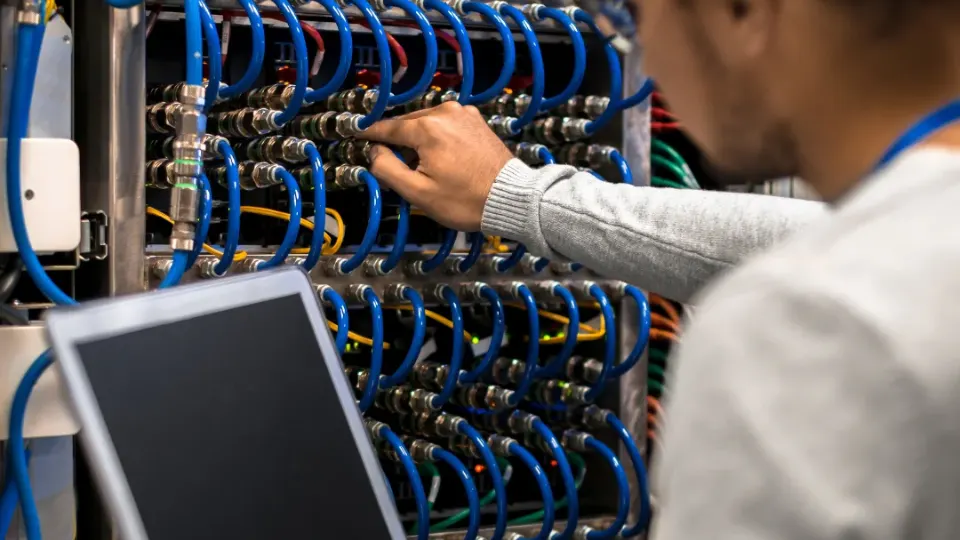
Network engineering and architecture
Configuration, optimization and troubleshooting across vendors, validated before it goes live.
Explore network engineering and architecture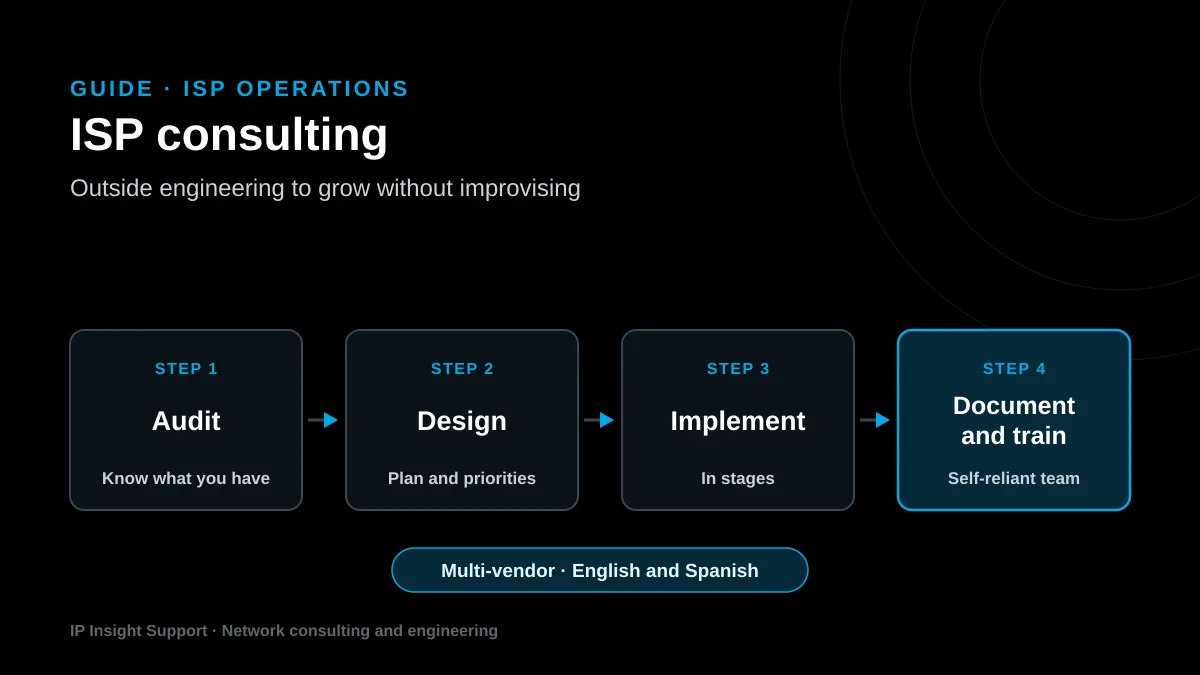
ISP Consulting: What It Is and When You Need It
Why ISPs work with network consultants: assessment, custom design, security and scalability, and what to expect from an independent engineering partner.
Read the guide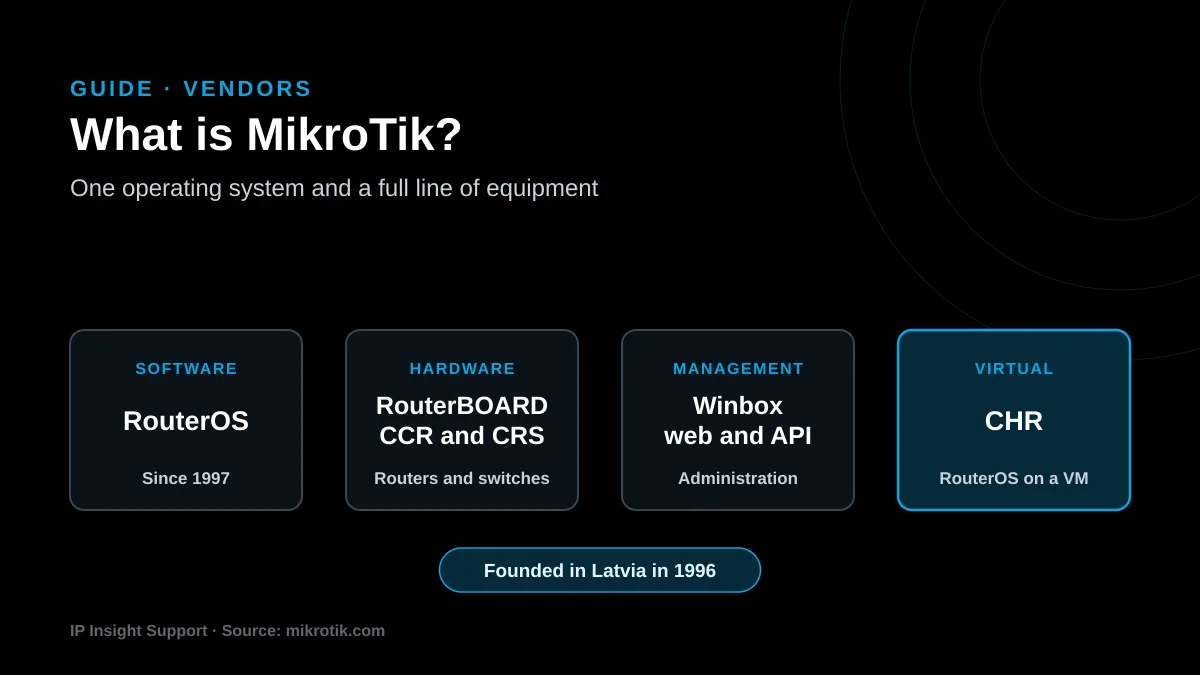
What Is MikroTik? RouterOS and Equipment for ISPs
What MikroTik is and why ISPs, WISPs and businesses use it: routing power, security features and versatility at a cost that scales with the network.
Read the guideFrequently asked questions
Do you have another question? Write to us and an engineer will answer, in English or Spanish.
What is quality of service (QoS) in a network?
It’s the set of techniques that decides how each type of traffic is handled when the network is busy: what gets priority, what gets limited and how queues are managed. The goal is for sensitive applications to work well even when the link is full.
Does QoS make my network faster?
It doesn’t add capacity, but it improves the experience. By managing queues well, it reduces latency and jitter, which is what users notice most on video calls and games.
Can you set up per-subscriber speed plans?
Yes. We configure per-subscriber plans on the router, on the BNG or through RADIUS attributes, depending on your architecture.
What is bufferbloat?
It’s the latency increase that happens when device queues fill up with packets. It feels like everything interactive slows down when someone downloads something large. Good queue management reduces it.
Does it work on wireless networks?
Yes. On wireless networks it matters even more, because link capacity varies. We combine QoS with link optimization.
Can you prioritize voice and video?
Yes. We classify traffic by type and by DSCP marking, per RFC 2474, and prioritize what’s latency-sensitive.
Ready for a network that performs at peak hours?
Let’s talk about your plans and your traffic, and define a measured quality of service policy.